
Senior Full Stack & System Architect
Architecting resilient Go backends, building cross platform solutions, and driving AI integration into business workflows. 10+ years of experience.
Projects
Here are my latest public projects
Slyber SFU Server - WebRTC Media Router
Slyber SFU Server is a zero dependency Selective Forwarding Unit for real-time WebRTC audio, video, and AI voice pipelines built in Go on top of Pion WebRTC v4. Features single-port 4443 UDP/TCP multiplexing, Simulcast/SVC, sub-millisecond roulette swaps, and SFrame E2EE.
Slyber TURN Server - High Performance Single Binary WebRTC TURN/STUN Server
Slyber TURN Server - a standalone media traffic relay server (STUN/TURN) for WebRTC applications, built on top of pion/turn/v4. Delivered as a single statically compiled binary for linux/amd64 and linux/arm64 with zero external system dependencies.
Shomla - Architecture of a Real Time WebRTC Voice Chat Platform Powered by Go
Shomla is a cross-platform, 1-on-1 voice chat service that runs directly in the browser with minimal latency and no native app installation required. At the core of the platform is a high-performance signaling server written in Go (Golang) that manages WebSocket sessions and smart matchmaking queues, paired with a hybrid WebRTC infrastructure (P2P + a distributed pool of TURN servers) featuring dynamic authentication. The frontend is built as a Zero-Framework PWA, offloading heavy logic to Web Workers to ensure instant UI responsiveness even on budget mobile devices.
HermitMQ: Architecture of a Go Message Broker with 3.4 GB/s Throughput and 2M+ Messages per Second
HermitMQ is a high performance, open source message broker written in Go, purpose built for high load systems where standard solutions introduce excessive latency and garbage collector pressure. By replacing heavyweight serialization frameworks with a custom 29 byte binary protocol, an mmap indexed Write Ahead Log, and zero copy reads, the broker surpasses 2,000,000 messages per second (over 3.4 GB/s throughput) on an Apple M1 processor.
Latest Articles
In depth articles, benchmarks, and postmortems on high concurrency backends, custom network protocols, WebRTC real time streaming, native AI systems and Web Development.
Real-Time AI Voice Pipelines over WebRTC SFU
Integrating conversational AI voice models such as Gemini Live or OpenAI Realtime API into live multi-party WebRTC calls typically forces engineering teams into a fragile architecture: spinning up headless browsers or heavy C++ GStreamer workers on the AI backend just to speak Opus over SRTP. When designing the AI gateway inside Slyber SFU Server, I eliminated server-side WebRTC duplication by introducing a lightweight, full-duplex binary WebSocket pipe (/ai/ws).
Zero-Allocation WebRTC SFU Architecture in Go
Building a basic WebRTC Selective Forwarding Unit (SFU) in Go using pion/webrtc/v4 takes a couple of days, but scaling it to thousands of concurrent rooms exposes severe bottlenecks: opening tens of thousands of ephemeral UDP ports breaks container networking, per-packet heap allocations trigger garbage collection pauses, and standard SDP renegotiation introduces multi-second black screens during peer switches.
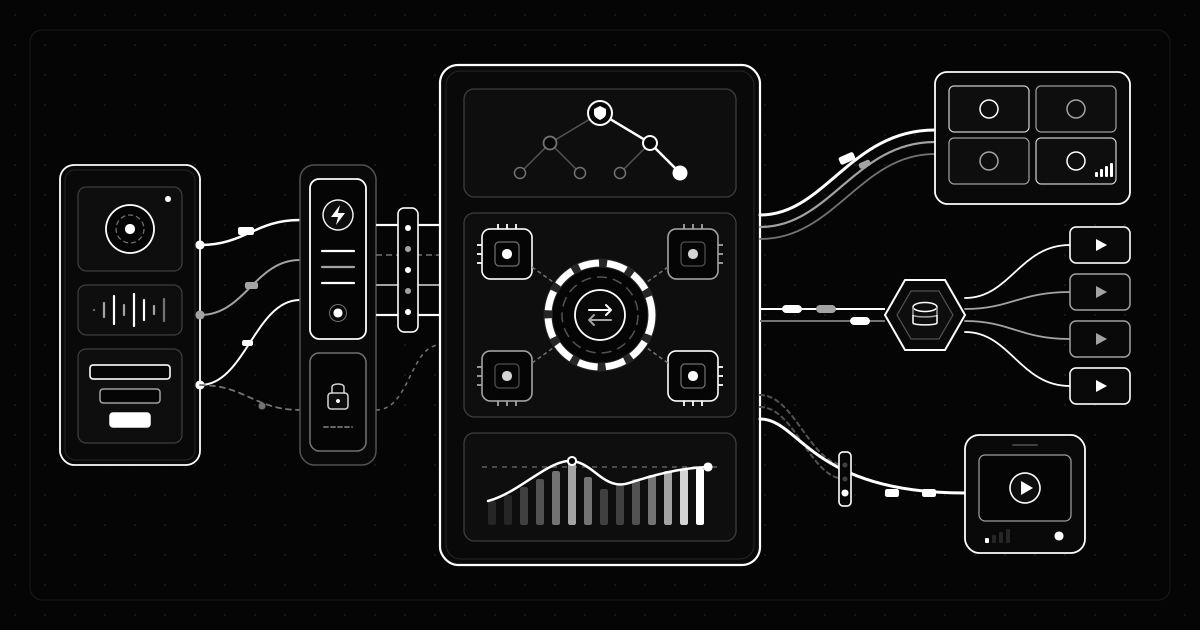
How an SFU Server Works
How a high-load SFU server works under the hood. Core isolation, SPSC queues, TWCC and GCC bandwidth estimation, Simulcast and SVC layers, WHIP gateways, and the MoQ stack.
Slyber TURN Server Architecture
You can write a basic STUN and TURN server in Go using the pion/turn/v4 library in a single evening with just a hundred lines of code. However, as soon as such a prototype hits a production server with hundreds of concurrent media streams, systemic issues surface: a single UDP socket queue hits Linux kernel lock contention, mobile clients switching networks clog the port pool with dead allocations, and an open relay becomes a target for scanning the internal cloud network.