
Senior Full Stack & System Architect
Architecting resilient Go backends, building cross platform solutions, and driving AI integration into business workflows. 10+ years of experience.
Projects
Here are my latest public projects
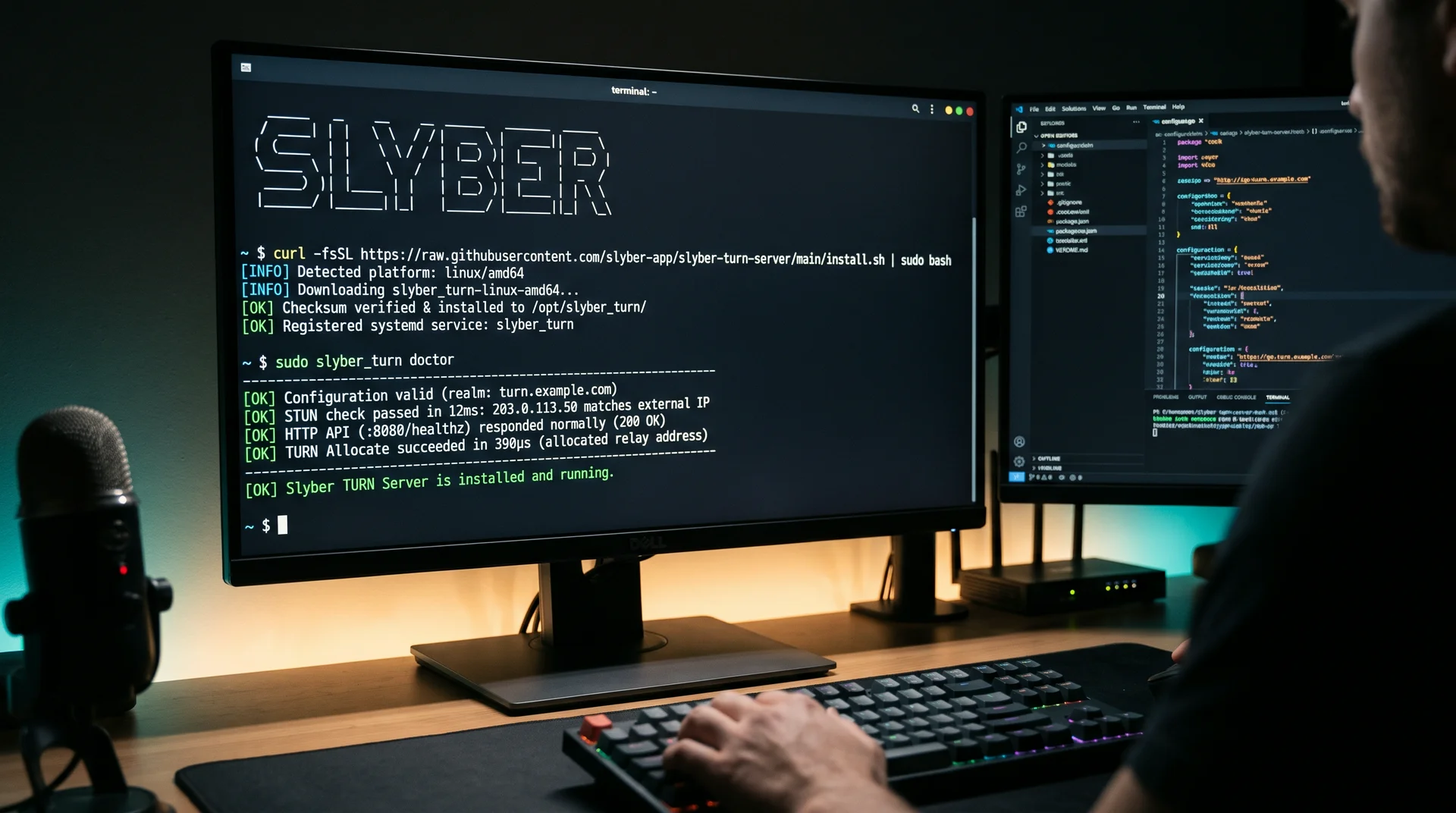
Slyber TURN Server - High Performance Single Binary WebRTC TURN/STUN Server
Slyber TURN Server - a standalone media traffic relay server (STUN/TURN) for WebRTC applications, built on top of pion/turn/v4. Delivered as a single statically compiled binary for linux/amd64 and linux/arm64 with zero external system dependencies.
Shomla - Architecture of a Real Time WebRTC Voice Chat Platform Powered by Go
Shomla is a cross-platform, 1-on-1 voice chat service that runs directly in the browser with minimal latency and no native app installation required. At the core of the platform is a high-performance signaling server written in Go (Golang) that manages WebSocket sessions and smart matchmaking queues, paired with a hybrid WebRTC infrastructure (P2P + a distributed pool of TURN servers) featuring dynamic authentication. The frontend is built as a Zero-Framework PWA, offloading heavy logic to Web Workers to ensure instant UI responsiveness even on budget mobile devices.
HermitMQ: Architecture of a Go Message Broker with 3.4 GB/s Throughput and 2M+ Messages per Second
HermitMQ is a high performance, open source message broker written in Go, purpose built for high load systems where standard solutions introduce excessive latency and garbage collector pressure. By replacing heavyweight serialization frameworks with a custom 29 byte binary protocol, an mmap indexed Write Ahead Log, and zero copy reads, the broker surpasses 2,000,000 messages per second (over 3.4 GB/s throughput) on an Apple M1 processor.
Latest Articles
In depth articles, benchmarks, and postmortems on high concurrency backends, custom network protocols, WebRTC real time streaming, native AI systems and Web Development.
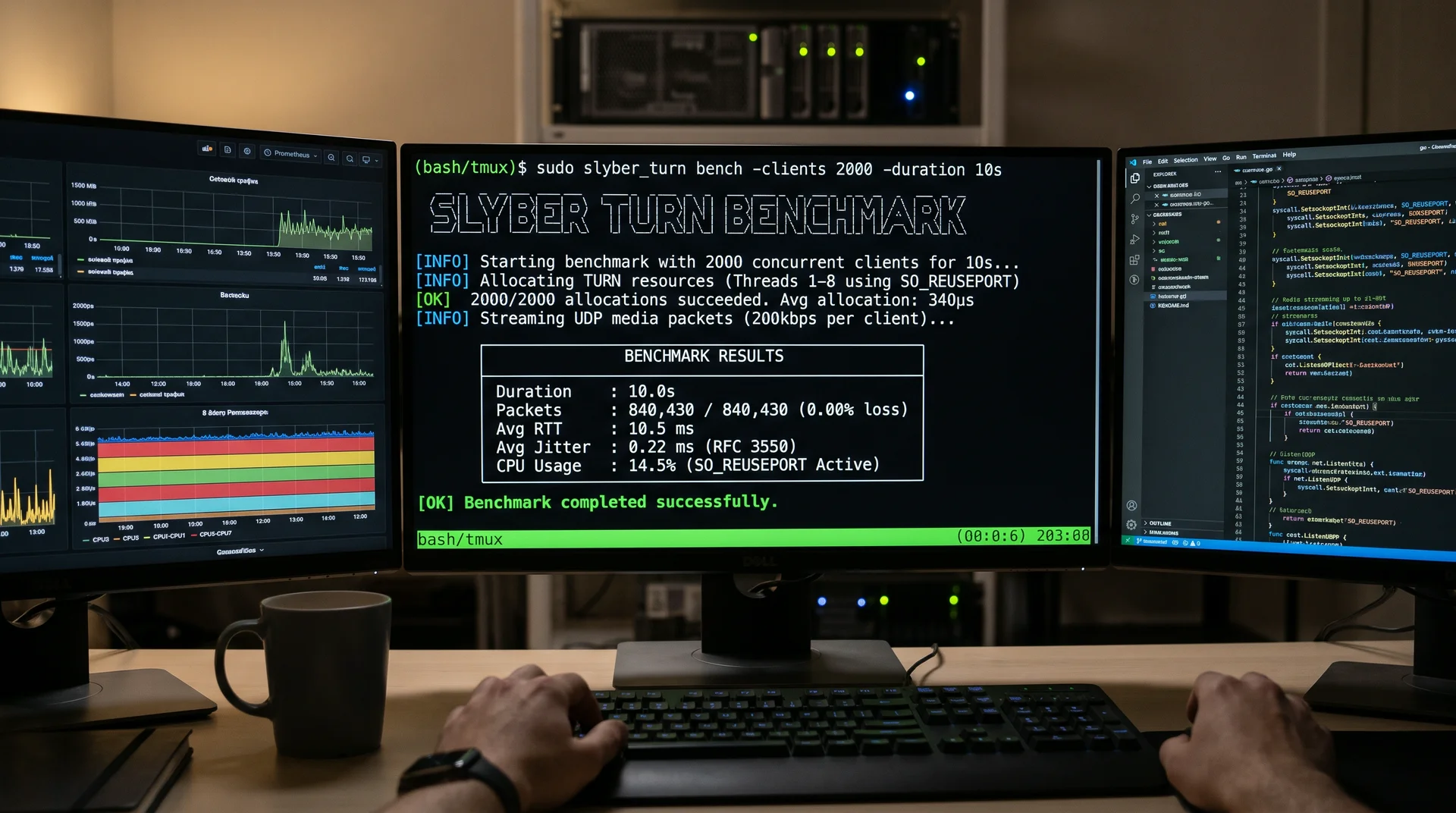
Slyber TURN Server Architecture
You can write a basic STUN and TURN server in Go using the pion/turn/v4 library in a single evening with just a hundred lines of code. However, as soon as such a prototype hits a production server with hundreds of concurrent media streams, systemic issues surface: a single UDP socket queue hits Linux kernel lock contention, mobile clients switching networks clog the port pool with dead allocations, and an open relay becomes a target for scanning the internal cloud network.
Why I Replaced Legacy Coturn for My TURN Server
When you launch a WebRTC project on a local network or test calls between two home routers, a direct connection via STUN works flawlessly. The problems start in production. Around 15 to 20 percent of users are behind NAT, carrier-grade CGNAT on mobile networks, or strict corporate firewalls. Without a reliable relay server (TURN), these clients stare at an endless connecting screen and leave.
Everything You Need to Know About IPv4, IPv6, Dual Stack, DNS64, and NAT64
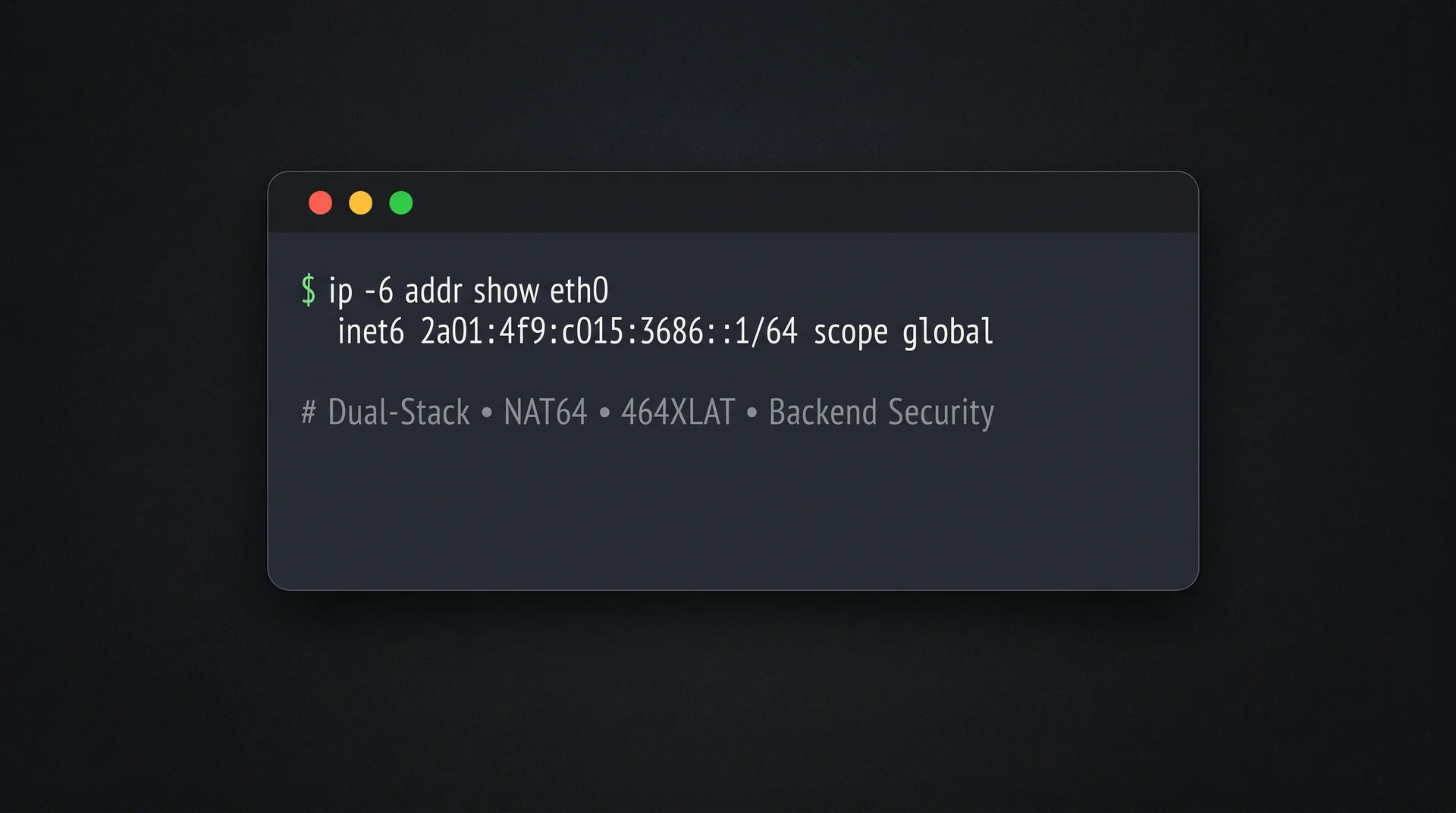
A clear, theory light breakdown of networking technologies for web developers. Starting from scratch, we cover the difference between public and private IP addresses, how Dual Stack, DNS64, NAT64, and 464XLAT work in mobile networks, why Cloudflare throws an error when adding an IPv6 address from Hetzner, and how to properly configure your database, rate limits, and server firewall.